Maintenance tied to the schedule
Help members know when an aircraft is available, limited, or grounded.
Maintenance tracking works best when it is visible before someone books. Contact Ground brings maintenance status, reminders, blocks, and squawks into the same system members use to schedule.
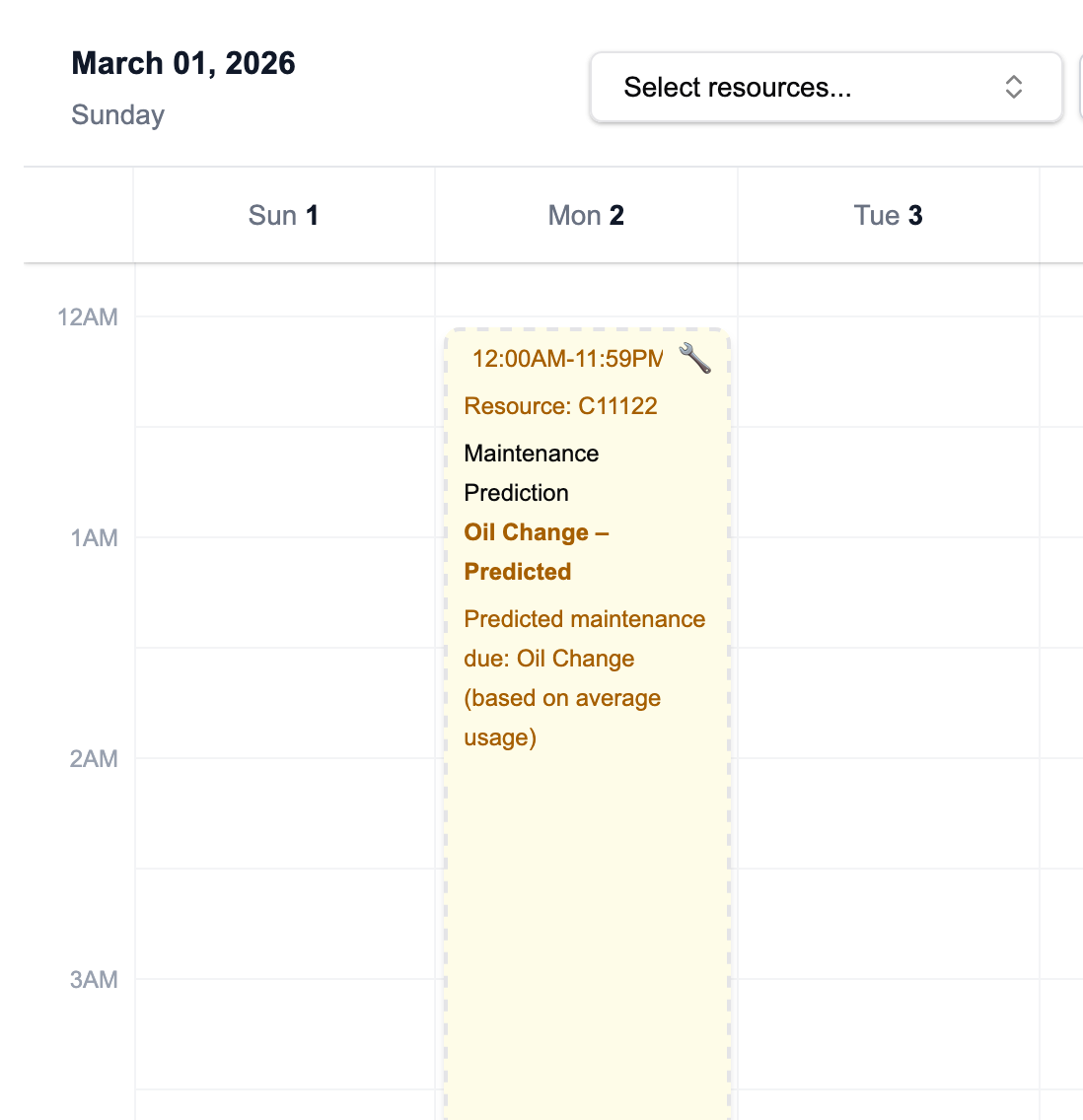
- Maintenance blocks: show aircraft planned maintenance windows on the schedule.
- Reminders: track upcoming maintenance items before they become urgent.
- Squawks: open issues included on preflight briefs. Viewable by all on Reports.
- Predictions: anticipate usage-based maintenance needs based on historical data and usage patterns.
- Cost planning: add predicted maintenance costs and include them in resource expense reports and hourly-rate planning.
Maintenance costs and hourly rates
Connect upcoming maintenance work to the real cost of operating each aircraft.
Maintenance reminders tell the club when work is coming due. Expense Management adds the financial side: expected inspection costs, oil changes, avionics reserves, overhaul planning, and other aircraft-specific costs can be included in the same reporting window used to review actual spending.
That gives owners, operations, and accounting users a clearer picture of what each aircraft should recover through hourly rates instead of relying on a spreadsheet that drifts away from scheduling and maintenance activity.
What goes into the calculation?
- Fixed ownership costs: hangar rent, insurance, loans, annual inspections, and other recurring expenses can be entered monthly, weekly, annually, or as one-time totals.
- Variable operating costs: fuel, oil, ramp fees, repairs, upgrades, and per-flight-hour reserves can be tracked by aircraft and category.
- Predicted maintenance: future costs tied to maintenance reminders are included automatically when the report date range extends into the future.
- Usage hours: aircraft usage for the selected period is used as the denominator for suggested hourly rates.
- Available funds: cash already reserved for maintenance or upgrades can be applied before calculating the suggested hourly rate.
1. Capture actual expenses
Enter standalone expenses or create expense entries from approved credit requests. Categorize each cost as fixed or variable and attach it to the correct aircraft.
2. Add future maintenance costs
Attach predicted costs to maintenance reminders for inspections, oil changes, component work, avionics planning, or engine reserves that should affect future hourly-rate planning.
3. Calculate cost per hour
Contact Ground totals actual expenses plus future maintenance predictions, subtracts available funds, and divides the result by aircraft usage hours for the selected period.
Suggested hourly rate
Net aircraft cost ÷ usage hours = suggested hourly resource rate
Reports show the breakdown behind the rate, including fixed costs, variable costs, predicted maintenance, available funds, usage hours, and the delta between the current and suggested hourly rate.
Track maintenance where scheduling decisions happen.
See how Contact Ground keeps maintenance, squawks, and calendar availability connected, including future maintenance cost planning.